'%3e%3cellipse%20cx='185.202'%20cy='292.401'%20rx='236.2'%20ry='212.4'%20transform='rotate(180%20185.202%20292.401)'%20fill='url(%23paint0_radial_6113_7068)'/%3e%3c/g%3e%3cdefs%3e%3cfilter%20id='filter0_f_6113_7068'%20x='-130.996'%20y='0.000976562'%20width='632.398'%20height='584.8'%20filterUnits='userSpaceOnUse'%20color-interpolation-filters='sRGB'%3e%3cfeFlood%20flood-opacity='0'%20result='BackgroundImageFix'/%3e%3cfeBlend%20mode='normal'%20in='SourceGraphic'%20in2='BackgroundImageFix'%20result='shape'/%3e%3cfeGaussianBlur%20stdDeviation='40'%20result='effect1_foregroundBlur_6113_7068'/%3e%3c/filter%3e%3cradialGradient%20id='paint0_radial_6113_7068'%20cx='0'%20cy='0'%20r='1'%20gradientUnits='userSpaceOnUse'%20gradientTransform='translate(-43.0144%20248.324)%20rotate(-25.0248)%20scale(462.733%20514.489)'%3e%3cstop%20stop-color='%23FF9DDA'/%3e%3cstop%20offset='0.44'%20stop-color='%23F7FF9D'%20stop-opacity='0.52'/%3e%3cstop%20offset='0.84'%20stop-color='%23FF8B7B'%20stop-opacity='0.2'/%3e%3cstop%20offset='1'%20stop-color='%23F7FF9D'%20stop-opacity='0'/%3e%3c/radialGradient%3e%3c/defs%3e%3c/svg%3e)


ERP systems became widely popular in the 1990s, promising to manage and integrate processes across accounting, production costing, inventory management, supply chain, and human resources. With ERP platforms providing efficiencies in these operations, companies could focus their efforts on the core business of developing and manufacturing products. For decades, that vision played out.
But as the world of product development increasingly shifted toward digital goods and recurring revenue business models, legacy ERP vendors were unable to adapt. Businesses, without an effective integrated solution to run their business operations, gravitated toward specialized point solutions for billing, revenue, CPQ, spend management and many others. These point solutions, often deployed in the cloud delivery model, were faster to deploy and easier to use. The flip side of that ease was fragmentation and broken business processes.
Companies are now faced with a jumble of specialized and unconnected tools, each with a different architecture and data model, cobbled together with inadequate integrations. Rather than a streamlined ERP system, today’s typical digital business has adopted a Frankenstein ERP architecture, that is an impediment to growth and progress. Introducing a new product, experimenting with pricing strategies, managing gross margin, or consolidating financials is painful, requiring exorbitant costs for services, integration, and further customization.
At Everest, we’re reimagining the world of ERP with a single platform that reflects today’s business models. From order creation to activation, invoicing to payments, revenue recognition to closing the books, and even managing people and cloud costs, every step is integrated. Everest enables you to replace a patchwork of products and integrations, with a single streamlined platform for business operations. With Everest, you can launch products faster, experiment with new business models, simulate what-if scenarios, forecast operational and financial metrics, and consolidate financials at any time during the month.
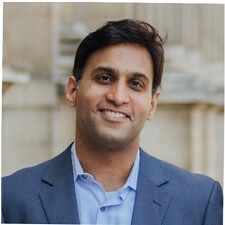
Sandeep Chopra